
Surely one of the great joys of sewing your own wedding dress is choosing the fabric. As I’m not paying for my own labour costs, this is essentially where I’m blowing the entire wedding dress budget. Terrifying.
Choosing the lace
From the dresses I tried on, I knew that bling made me very happy. So I certainly wanted a sparkly lace, with a satin layer underneath and of course a lining. I started with the embroidered lace because this was one of the dress’ main design features. My search even went international when I popped into Tissus Reine in Paris, but my favourite finds ended up being from Bridal Fabrics in the UK.
After much scrolling, I found and fell in love with a fabric called Verena. It was a feminine lace with lots of sparkle, and was more leafy than flowery (I realised early on that I don’t like things too floral). I could get up to 5 free samples so I added 4 others to my cart. While waiting impatiently for the samples to arrive, I cannot tell you how much I daydreamed about this leafy lace. It got to the point where I would type “V” into my phone browser and it would immediately suggest the Verena website. So when the samples arrived, surely that would be the one?
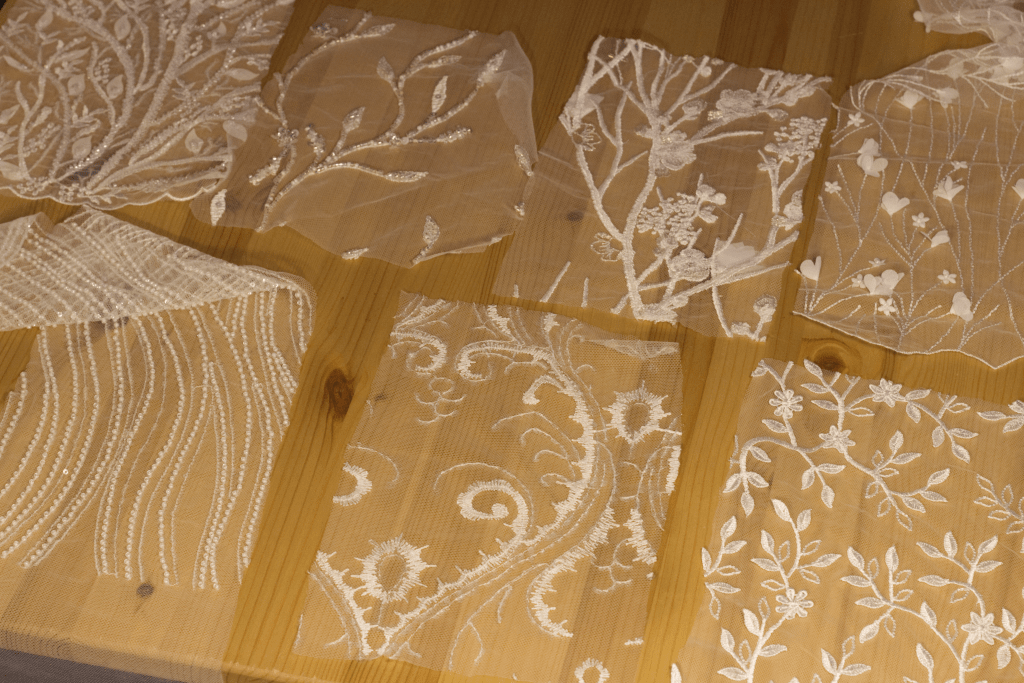
As it turns out, this is exactly why you buy samples! My fiancee and I examined the samples as I paraded around holding each one against a white t-shirt. We liked the Verena, but there was a dark horse quickly shooting into first place.
A sequinned geometric design called Risette was the winner. I thought that I wanted a beaded fabric because I imagined sequins to look tacky. However I realised that sequins actually catch the light in a more beautiful way than beads do. Beads are round so they reflect in a similar way depending on where the light is coming from. Sequins reflect best in one direction, causing a more glittery effect as you move around. It didn’t look tacky at all, and the geometric design hit the sweet spot between feminine and – for lack of a better word – cool. My fiancee also loved it and it meant a lot to me that he had a hand in the design.
The corselette
To guide the rest of my decisions, I put all the blogs I had read into a spreadsheet and noted which fabrics they used, how each blogger felt about their choices and any other fabric-related advice (except listed below).
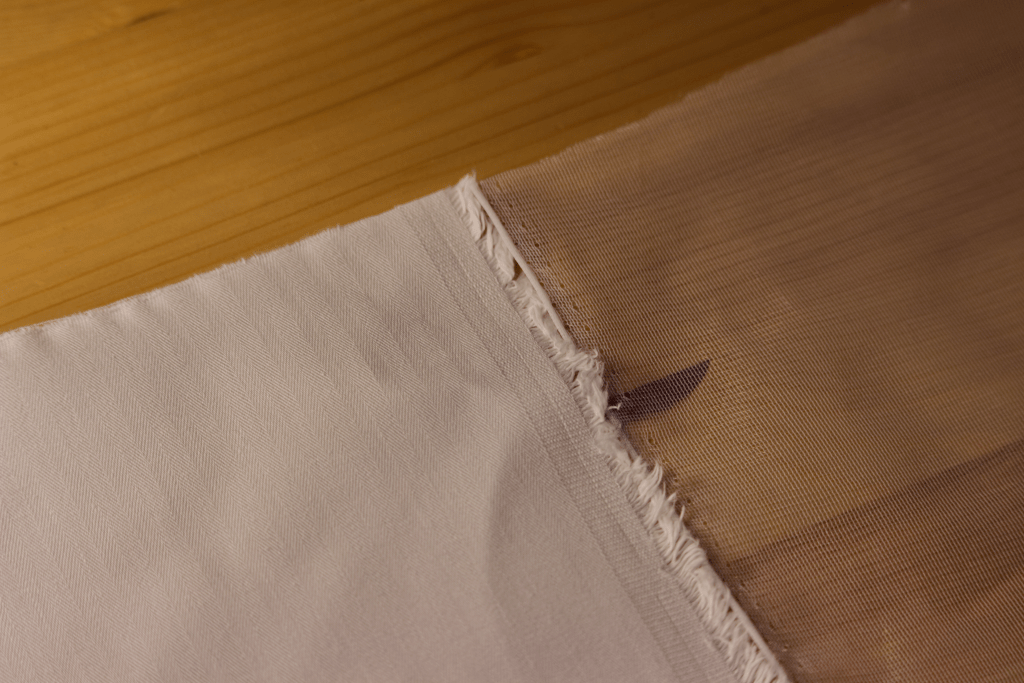
The corselette fabric could either be a cotton coutil, widely used in corsetry, or some kind of polyester mesh. The mesh would be thinner, lighter, and in theory still breathable because of the holes. However I found that the holes weren’t enough and the synthetic fibre still felt hot on my skin. It would also have to be lined to be comfortable, whereas the coutil (from Minerva) was breathable and soft.

Doubling down on Satin
The base satin and lining fabric were the last pieces of the puzzle. Looking at my spreadsheet, I was pleasantly surprised that the blogs largely agreed with each other on fabric choice; silk satin/crepe backed satin for the main layer and silk habutai for the lining.
The samples I bought online looked beautiful, but I was concerned about the opacity and also the colour matching. Turns out not all ivories are made alike. I was trying to match the colour to the outer lace, as well as my shoes. Now it may seem strange to have my shoes be a guiding factor but it turns out that finding shoes that hit the right style, price point, heel height, and comfort level doesn’t leave you will that many choices. So it was easier to pick the shoes first.
My last stop in my fabric search was Goldhawk Road, where I went armed with all the previous fabric samples, my spreadsheet, and a shoe. I went straight to Classic Textiles and I was so happy with the advice that I got in that shop. Nothing beats fabric shopping in person.
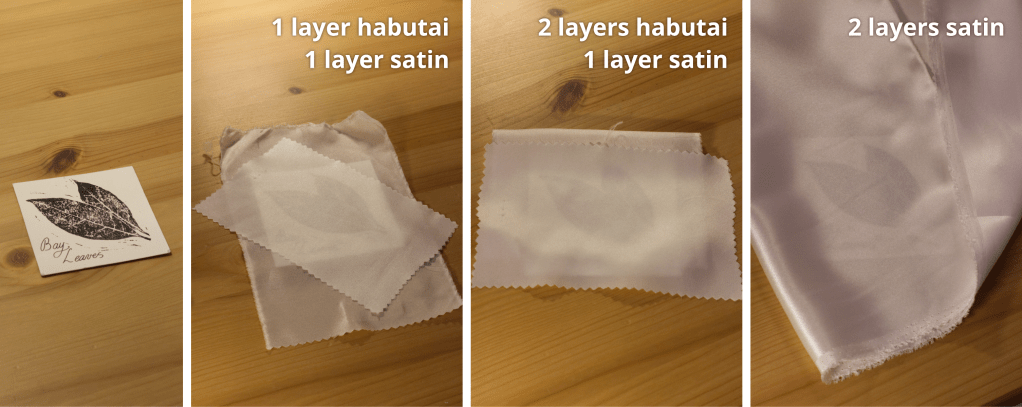
Effectively they told me that Silk Habutai adds cost without bringing much functionality. It’s a bit static and quite sheer (which was true for the samples I had at least), so I would probably end up with another layer of skirt. They gave me two suggestions: an acetate lining; cheap, opaque, but not breathable, or I could double down on the satin and use it as a lining too. It would certainly be opaque with natural fibres that feel glorious on the skin – it’s just not cheap.
At this point my fabric cost estimate was hovering around the £750 mark (over half of which was the lace) and I was not keen to go over £800. Could I keep the dress in natural fibres without breaking the bank?
This is where my spreadsheet came in. I had previously laid out my pattern pieces digitally to see the amount of fabric I’d need for different fabric widths. This told me how much fabric I’d need as a minimum, and I budgeted a few more metres for mistakes. What I realised was that since the satin came from a single supplier, I could reduce the amount of leeway fabric that I needed to buy upfront. At this point I was standing in the shop, punching the new numbers into my spreadsheet to see if it would fall in budget – and in fact this turned out to be cheaper than my original plan! A bonus was that the colour match of the satin was perfect with the shoes, so I bit the bullet and bought it.
The dream team was assembled, now just the terrifying job of cutting into it.

What I learned
- Get lots of samples and look at them in daylight. Inside lighting is too yellow and distorts the colour
- Embroidered lace is expensive and generously embellished fabrics are heavy. This should be taken into account for (1) overall budget (2) sewing time and (3) the weight of the dress.
- Silk habutai is very lightweight but also sheer. You would need quite an opaque satin to go over it
- If you are buying expensive fabric, don’t be afraid to ask to inspect the fabric for imperfections before they cut it
- Ask about the availability of a fabric throughout the year. A regularly stocked fabric that comes from the same supplier mean you can buy less of it upfront. And if buying deadstock fabric, make sure to get plenty!
Blog comparison
All of these blogs were invaluable in making fabric choices. It is well worth reading all the details of each of them as there is much more wisdom that couldn’t possibly fit into a table!
| Blog: | Nina Lee Loves | Untitled Thoughts | Handmade Millenial | Kat Makes |
|---|---|---|---|---|
| Bodice style | Sweetheart strapless bodice with off-soulder straps | Sweetheart neckline with spaghetti straps and low V-back | Deep-V front and low back | Sweetheart princess seam bodice |
| Skirt style | Ballgown circle skirt with train | Fit and flare | Fit and flare | Circle skirt |
| Engineering design features | Long corselette, spiral steel boning | Long corselette, spiral steel boning | V-wire, waist stay Silk organza strips in key seams and inside the straps | Corslette to waist (but recommends longer) |
| Corset fabric | Cotton Coutil from MacCullock and Wallis | Cotton coutil | N/A | Cotton coutil |
| Lining fabric | Silk habotai | Bias silk charmeuse | Silk habotai? | |
| Bodice fabric(s) | Ivory Crepe Satin from Pongees – Domette underlining (but recommends a lighter underlining e.g. silk organza) Chantilly lace Guipure lace applique | Silk charmeuse Silk organza underlining Coutil corselette Beaded lace applique | Beaded lace from Bridal Fabrics Silk organza bias | Straps – satin tubes with twill tape Silk satin Silk gauze top layer Tabour beaded design |
| Skirt fabric(s) | Silk satin – Underlined with cotton voile (but recommends something lighter e.g. organza) Ivory tulle Silk organza | Silk charmeuse Silk chiffon | Beaded lace Silk satin (assumed) with silk habotai underlining | Crepe back silk satin Silk chiffon Pink silk gauze middle layer Ivory silk gauze |
 The Impatient Sewist
Leave a comment