
I was quite nervous to start the lace work because it’s the only part of the dress that I had never tried before. The cost of the lace also constituted about half the total cost of the dress so there wasn’t much room to mess up.
Placing a lace pattern – be it floral, geometric, subtle or loud – can be tricky. It’s not something you can plan on the computer and because it is best done in 3d it feels more like sculpture than anything else. I spent a lot of time pinning sections on my mannequin, staring at it, repinning, and taking photos, until the lace placement made sense. I found that the pattern had to complement the design – for example where the waistline goes in, the lace should swirl in the same direction.
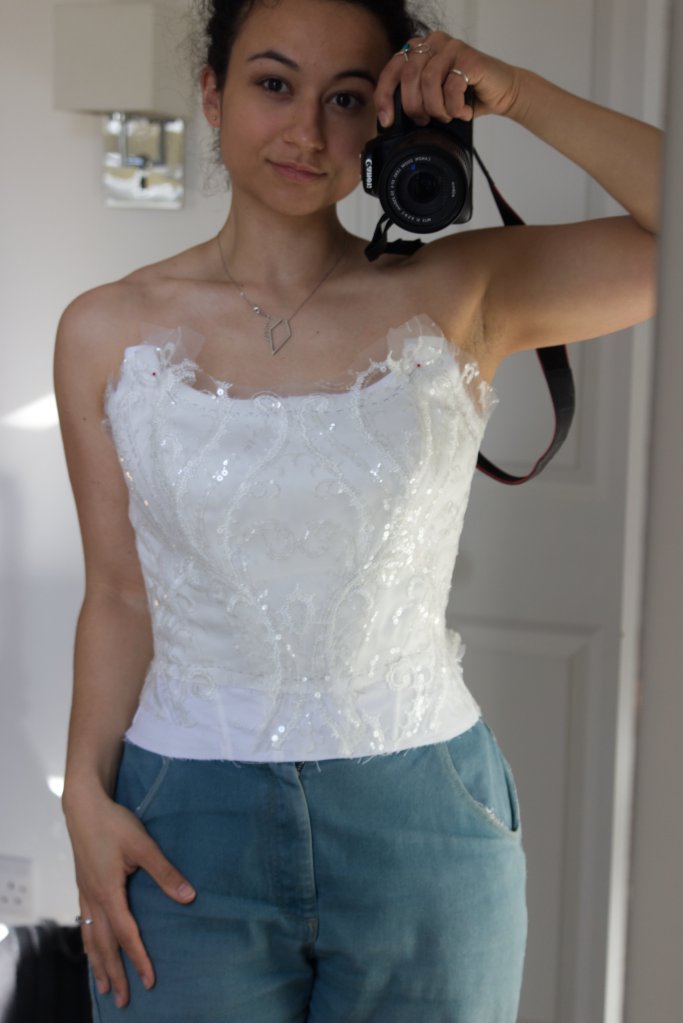
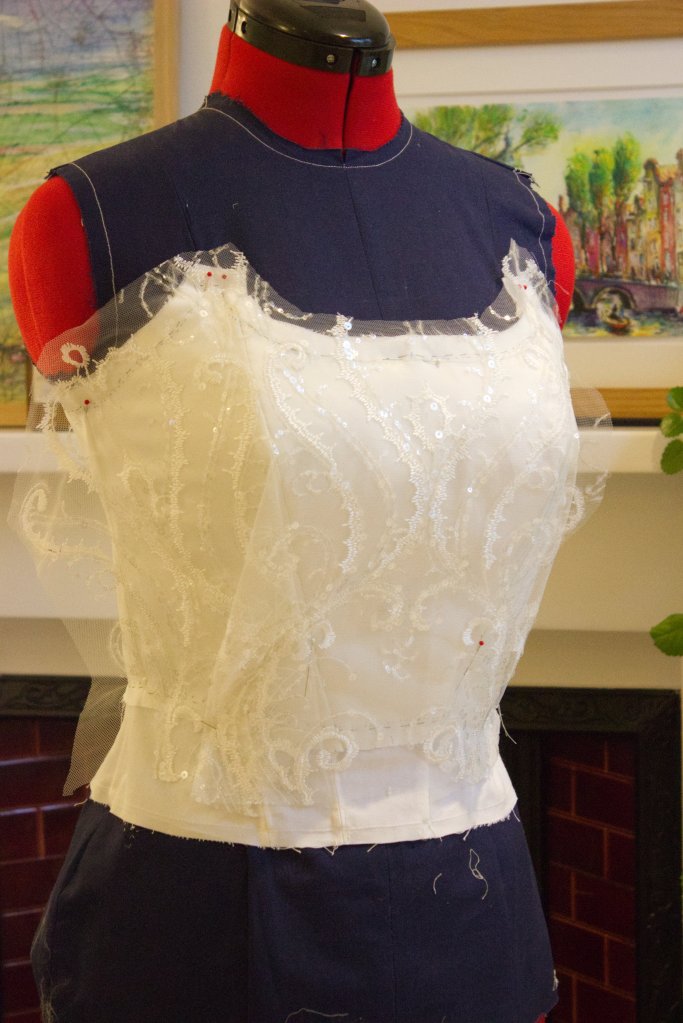
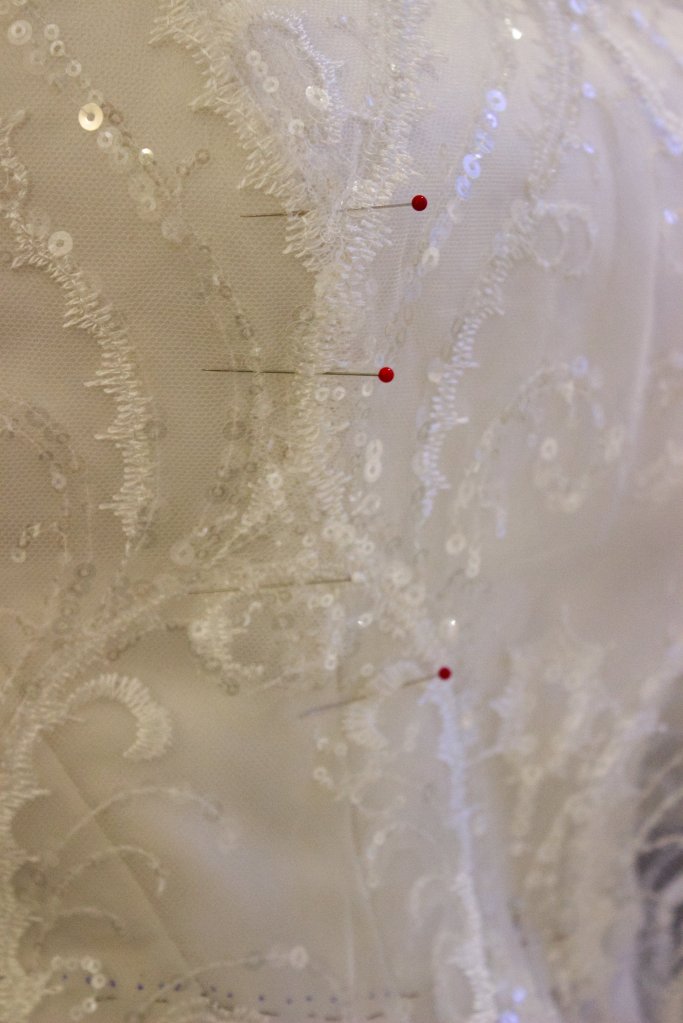
Once I knew how to place the lace, I used two different techniques for the bodice and skirt. For the bodice, I did everything on the mannequin. I pinned by corset and satin to the mannequin and then overlapped bits of lace on top. I carefully basted them together – still on the mannequin and trying not to catch the satin layer – before going over the seams with a zigzag stitch. I was incredibly lucky that my sewing machine accepted the sequinned fabric or I would have had much more hand-sewing to do…
It’s worth noting that the location of the seam in lace work is not always the same as the underlayers. The best way to create an invisible seam is to overlap the lace and stitch around the lace pattern.
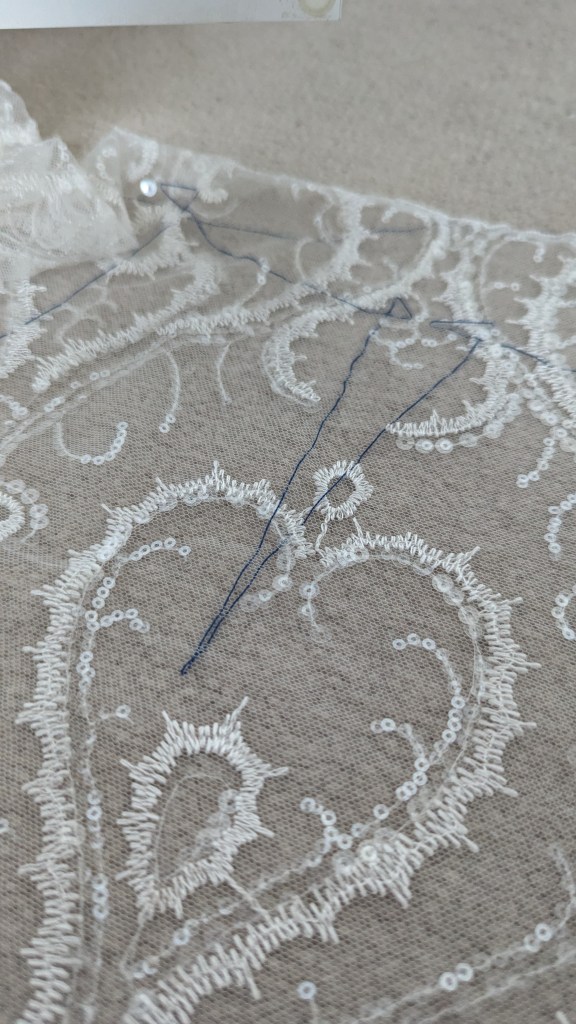
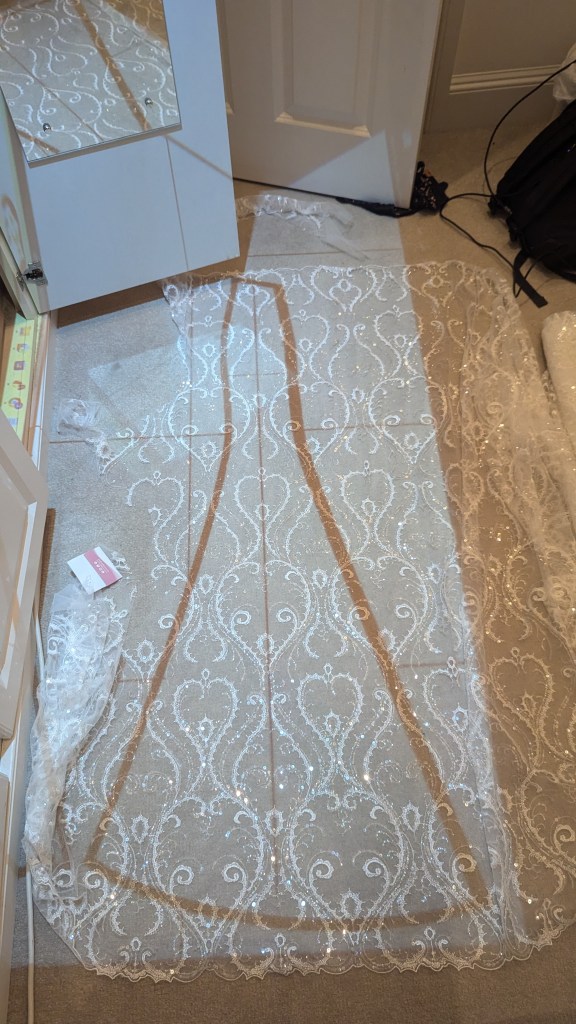
For the skirt, I projected my pattern pieces on the lace and thread-traced around each one with blue embroidery floss. I then cut widely around the stitch line and joined each seam by matching up the thread-traces. The actual stitch lines were determined by the best overlap of the lace, creating a meandering seam that hides within the design. I basted this with blue thread two before zigzagging it all together. The final reveal comes when you trim away the excess lace, and you should have a 3d piece of lace that looks like it was designed that way!
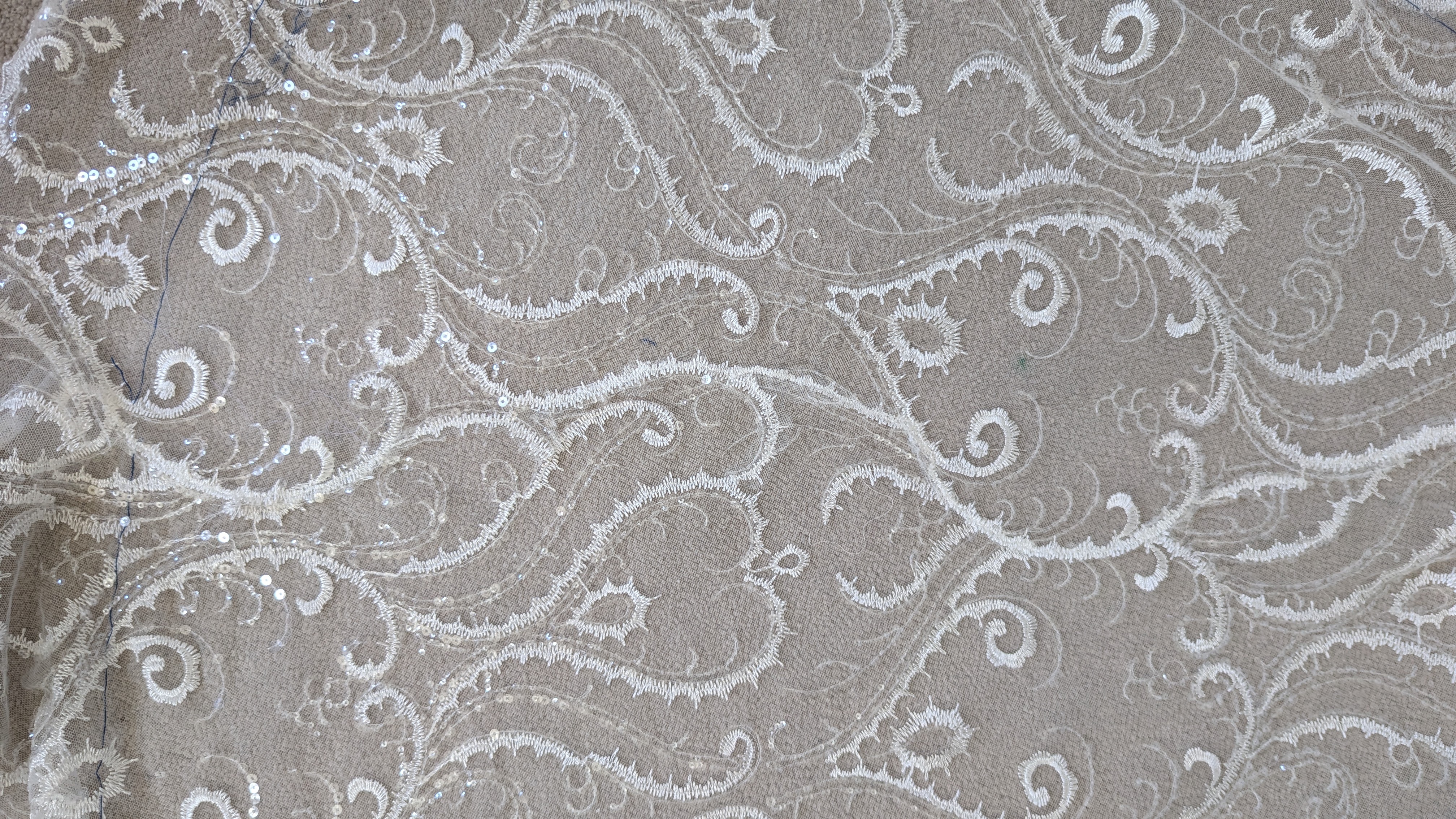
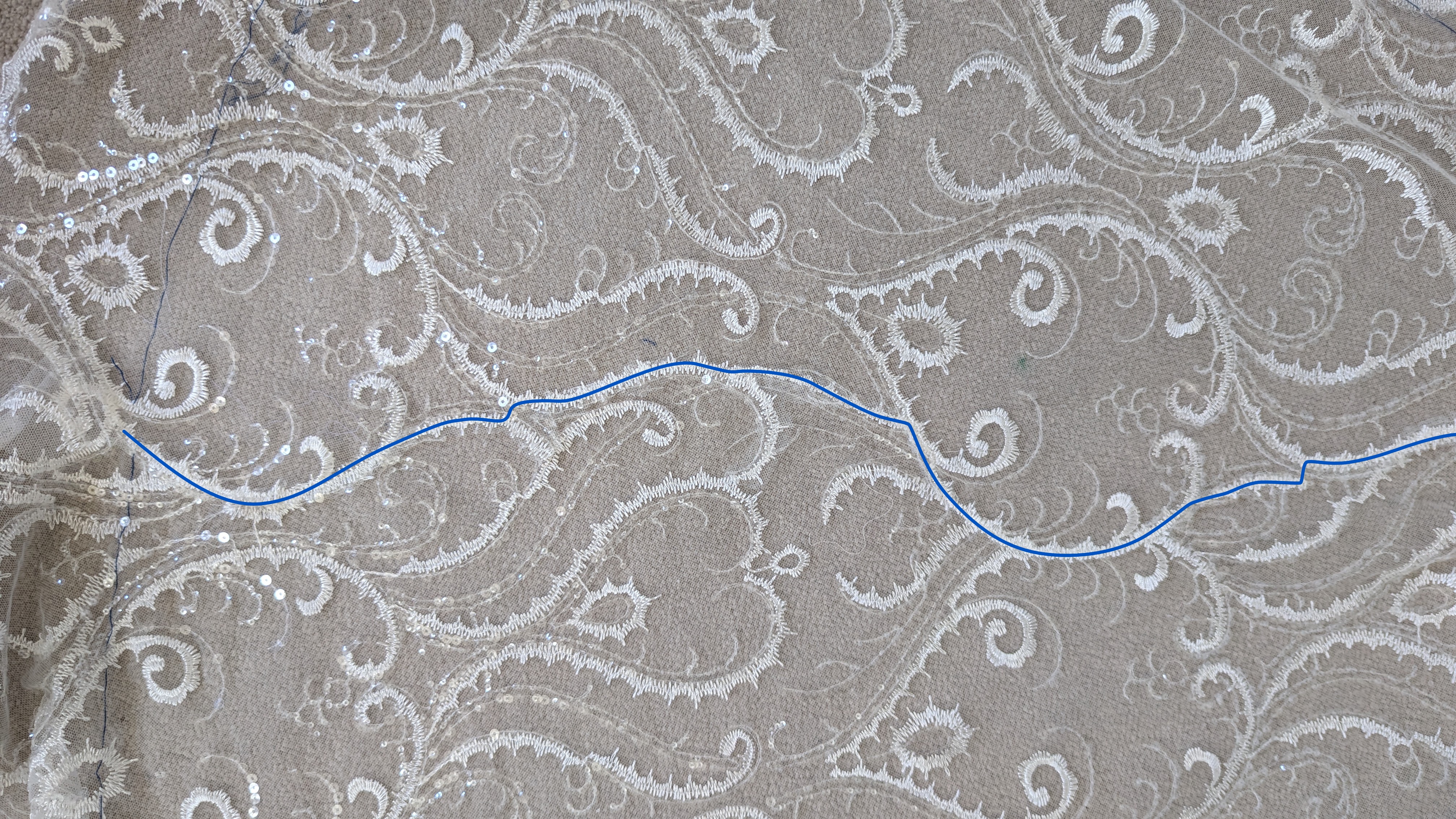
The hem of the skirt came from the edges of the lace. Usually lace has a special design on the edge which you can trim off and join to the hem in the same way as the other seams.
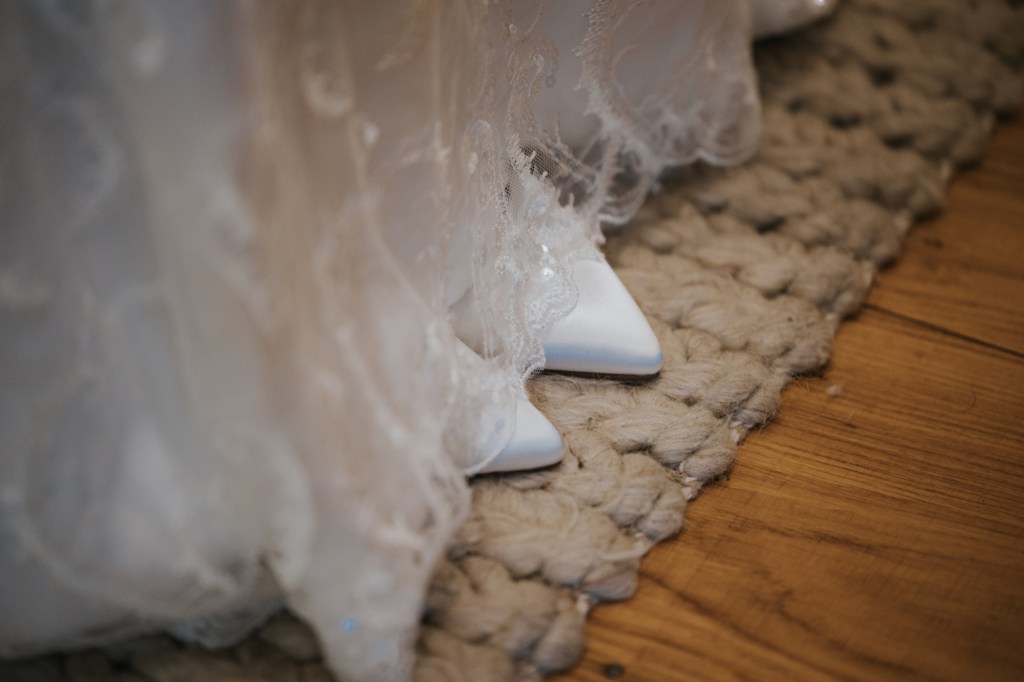
The lace work was a lot more fun that I imagined and a bonus was how sparkly the sequins where in the evening light. It made me more confident to try adding lace to some other projects, because there are so many designs out there and it really adds something special.
 The Impatient Sewist
Leave a comment